Motion & Pleading Drafting for Law Firms
Court papers that
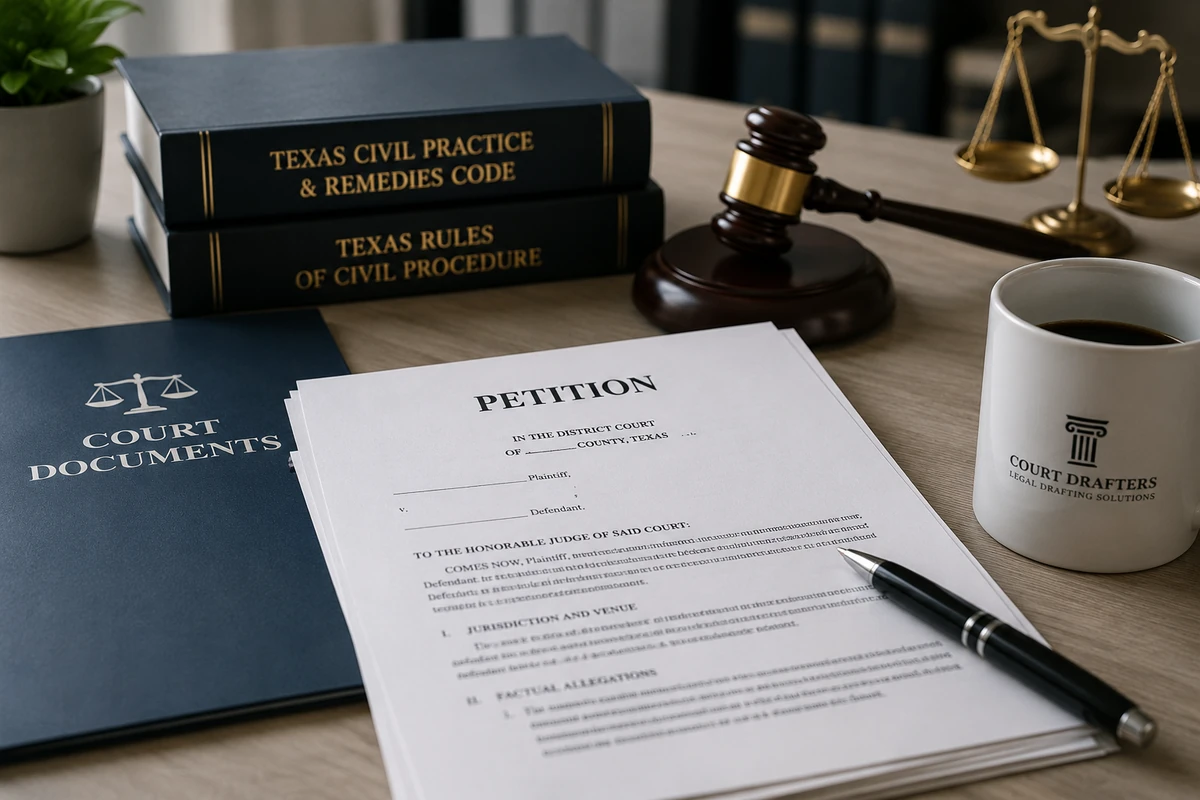
A motion or pleading is judged first on whether it looks right: the caption, the structure, the sections the court expects and the order they appear in. Court Drafters prepares court documents that meet those expectations, built from your record rather than a generic template.
For attorneys, we work as an extension of your drafting bench — first drafts, overflow motions and supporting papers returned for your review and signature. For self-represented litigants, we turn the facts and documents you provide into a properly structured filing you review, sign and file yourself.
Caption formats, page limits, font and margin rules and required sections vary between federal and state courts, and often between divisions. We draft to the requirements you identify and flag anything that appears to be missing.
Attorneys keep full control of strategy, arguments and filing. Self-represented litigants decide what to file and what position to take; we prepare the document from those instructions.
Built for
U.S. law firms & attorneys
- First drafts of motions, oppositions and replies
- Pleadings and amended pleadings from your file
- Supporting declarations, affidavits and proposed orders
- Returned for your review, revision and signature

Self-represented litigants
- A properly structured motion, petition or response
- Captions and formatting for the court you identify
- Plain-language explanation of what each section does
- You review, sign and file every document yourself

Common documents
Motions
Oppositions & Replies
Petitions
Proposed Orders
Affidavits & Declarations
Notices & Memoranda
Included —
- Drafting from your facts, record and instructions
- Formatting for the court you identify
- Internal consistency across related filings
- Revisions after your review
- The papers you have received or filed
- Your deadline and hearing dates
- The relief you want to request
- Any draft you have already started
- Act as attorney of record
- Appear in court or argue a motion
- File documents on your behalf
- Guarantee any ruling or outcome
How it works
Send the papers, the facts and your deadline.
Scope check: we confirm the document and what is missing.
We draft the motion or pleading for your court.
You review, sign and file it yourself.
Asked
Yes. Attorneys use Court Drafters for first drafts and overflow motion practice. The instructing attorney directs the work, reviews it and signs it.
Yes. We prepare the document from the facts, papers and instructions you provide. You decide what to file and you sign and file it yourself.
We format to the requirements you identify for your court and flag anything that appears to be missing. Confirm the current local rules with the court before filing.
Tell us your deadline in your request. During the scope check we confirm whether the timeline is workable before any drafting begins.
No. Nothing is filed in your name or on your behalf. You or your attorney file the document.
Start with a document-scope assessment

Useful links
Contact us
Email us
Drafting request
Service area
Remote, nationwide across the United States