Legal Document Drafting Services
Court Drafters provides legal document drafting services for self-represented litigants and law firms nationwide. You supply the facts, records and instructions. We produce the written document — properly structured, correctly formatted for your court, and returned to you to review, sign and file.
Pleadings, motions and petitionsContracts and agreementsFamily law paperwork
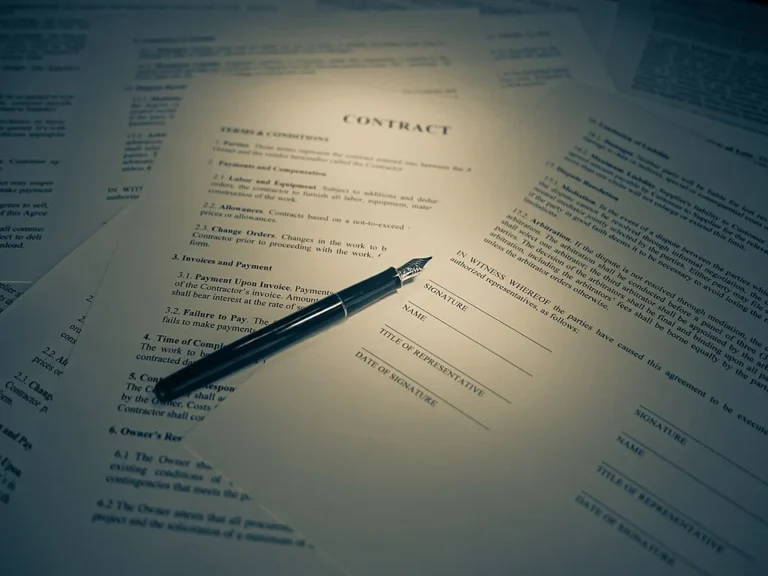
What Legal Drafting Actually Involves
A court document is not just a statement of what happened. Legal writing has its own conventions: a caption, a case number, named parties, a statement of jurisdiction, numbered factual allegations, and a specific request for relief — set out in the order and format the court expects. Get that structure wrong and the substance can be lost before anyone reads it.
That is the work Court Drafters does. Drafting legal documents means taking the facts and records you supply and writing them into a document the court, the other side and the judge can follow. Documents prepared here include pleadings, motions, petitions, responses, affidavits, declarations, supporting memoranda, proposed orders, discovery documents, demand letters, contracts and agreements for U.S. courts.
Our work can include legal research, document-focused guidance, issue analysis and drafting recommendations — identifying the questions a document needs to address, how the available material bears on them, and how the document can be structured to present it. Final decisions remain yours. You decide what position to take, you sign the document, and you file it. Where a matter calls for jurisdiction-specific advice or representation before a U.S. court, that requires counsel licensed in the relevant state.
Document Types We Draft
Court Drafters prepares these categories of United States court and legal documents remotely for clients nationwide.
Explore Our Drafting Services
Six categories, drafted remotely for clients across the United States. Each links to the service page for that document type.

Court Documents
Motions, pleadings, petitions, affidavits, declarations, supporting memoranda and proposed orders, formatted to your court’s requirements.

Civil Litigation Documents
Complaints, answers, affirmative defenses, counterclaims and discovery responses for civil lawsuits.

Family Law Documents
Divorce petitions, custody and parenting documents, support paperwork and modification requests.
Contracts and Agreements
Service agreements, NDAs, independent contractor and consulting agreements, settlement and partnership documents.

Claim Documents and Demand Letters
Demand letters and supporting claim documentation assembled from the records and losses you provide.

Trademark Application Document Preparation
Trademark application materials and supporting document preparation based on the information and materials you provide. Court Drafters does not represent applicants before the USPTO.
How the Drafting Process Works
You send what you have
The papers you have received or filed, the facts as you understand them, any deadline you are working to, and any draft you have started. Exhibits and supporting records help.
Document-scope assessment
First, we confirm which document you are asking us to draft, whether it fits this service, and what factual information is still missing. This is a scope check, not a case evaluation.
Drafting
Working only from your materials, we write the document — caption, parties, jurisdiction, numbered facts, argument where the document calls for it, and the relief requested — formatted to the requirements of your court. Those requirements vary by jurisdiction — the federal judiciary publishes the current Federal Rules of Practice and Procedure, and each state court publishes its own.
Review and revisions
You read the draft and tell us what to change. Revisions are part of the work. When you are satisfied, you sign and file it yourself.
Who Uses Our Legal Document Drafting Services
Self-represented litigants
Most people who come to us are pro se litigants handling a matter without an attorney. They understand their own situation; what they need is the document written properly and on time. Court paperwork has conventions that are obvious once you know them and invisible until someone shows you.
Attorneys and law firms
Solo practitioners and small firms use the same drafting capacity for overflow work — pleadings, motions, discovery documents and research summaries. Scope, supervision, strategy, review and filing remain with the instructing attorney, who signs the work.
- Drafts built around your facts, not a blank template
- Turnaround set against the deadline you tell us about
- Revisions included as part of the drafting work
- No retainer, no representation, no obligation beyond the document
Where our role ends
Court Drafters can research the applicable rules, analyse the issues your document needs to address and recommend how it is best presented. What we do not do is act as attorney of record, appear or represent you in a U.S. court, or file on your behalf, and we are not a U.S. law firm. Representation and jurisdiction-specific advice in a state where we are not licensed require counsel admitted there. You make the final decisions, sign and file.
Legal Writing and Legal Research Support
Legal writing is the discipline of presenting facts, issues and argument in the structured form a court or counterparty expects. Legal research is the work of locating the authority that supports it. Court Drafters provides legal writing services and legal research services as part of document drafting, so the written product is organised, sourced and internally consistent.
Drafting and writing are not the same task. A document can contain every relevant fact and still fail because the issues are not framed, the argument does not follow a logical order, or the authority relied upon is never identified. Our legal research and writing services address that second layer — the reasoning inside the document, not just its format.
What Legal Writing Services Cover
- Issue framing — setting out what the document is asking the reader to decide, in the order a reader expects to encounter it
- Fact organisation — arranging the facts you supply into a chronological or thematic sequence that supports the document’s purpose
- Argument structure — building each point so the statement, the support and the conclusion are visible rather than implied
- Plain-language clarity — removing ambiguity, redundancy and sentences that carry more than one reading
- Internal consistency — ensuring dates, parties, amounts and defined terms match across the whole document and its exhibits
What Legal Research Services Cover
Research-supported drafting means the document identifies the rules, statutes and procedural requirements it relies on, drawn from published sources you or we identify. Legal research services here mean locating and summarising that material so it can be cited accurately inside the document.
- Locating the procedural rules that govern the document type in your jurisdiction
- Summarising statutory language relevant to the point being made
- Compiling authority into a memorandum you can review before it is used
- Checking that citations in an existing draft match the sources they name
Where the boundary sits: we can research the applicable rules, analyse how they bear on the issues in your document, and recommend how the material is best presented. What we do not do is act as attorney of record, appear or represent you in a U.S. court, or file on your behalf. Court Drafters is not a U.S. law firm. Where your matter requires jurisdiction-specific advice or representation in a state where we are not licensed, you should obtain it from appropriately licensed counsel. Final decisions, signature and filing remain with you.
How a Legal Document Is Structured
Most drafting problems are structural rather than substantive. A court document follows conventions that are invisible until someone points them out, and our drafting methodology works through them in a fixed order.
The Anatomy of a Court Document
- Caption — court name, parties as they appear on the existing record, case number and document title
- Introduction or preliminary statement — what the document is and what it asks for, stated before the detail
- Statement of facts — numbered where the document type expects numbering, each paragraph carrying one fact
- Argument or grounds — the reasoning, with the authority relied upon identified
- Relief requested — precisely what the reader is being asked to order or do
- Signature block, verification and certificate of service — where the document type requires them
- Exhibits — labelled and referenced consistently from the body
Legal Memoranda and Briefs
Legal memoranda and briefs sit apart from ordinary filings because their job is persuasion or analysis rather than notice. A memorandum sets out an issue, the applicable rules and how they apply to a set of facts. A brief carries argument to a court on a defined question.
We prepare supporting memoranda, trial briefs and appellate briefs, including statements of issues, summaries of argument, and tables of contents and authorities where the format requires them. Appellate documents carry their own conventions — record citation, page and word limits, and prescribed section order — and are drafted to the requirements you identify for the reviewing court.
Jurisdiction-Sensitive Drafting
The same document is not drafted identically everywhere. Terminology, numbering conventions, mandatory sections, formatting and filing procedure differ between federal and state courts, and individual courts add local requirements on top. The federal judiciary publishes the current Federal Rules of Practice and Procedure; each state court publishes its own.
We draft to the requirements you identify for your court, and we tell you when something in the materials you supplied appears to be missing. Confirming the applicable rules before filing remains yours to do.
The Revision Process
A first draft is a starting position. You read it, mark what is wrong, and tell us what to change — facts you would put differently, emphasis you want moved, sections you want expanded or cut. We redraft and return it. Revisions are part of the drafting work, not a separate service, and the document is not finished until it says what you intend it to say.
Drafting Support for Law Firms
Court Drafters provides drafting and litigation support services to attorneys handling more work than their own capacity allows. Typical requests include pleadings, motions and supporting memoranda, legal research summaries, discovery requests and responses, appellate briefs and contract drafting. Firms sometimes describe this as legal process outsourcing; in practice it is defined-scope drafting work returned to the instructing attorney.
Court Drafters is not a staffing agency, an eDiscovery platform or a technology vendor. The work is drafting, and only drafting. The instructing attorney defines scope, supervises the work, exercises professional judgment, reviews the final product and signs or files as appropriate.
What This Service Includes — and What It Does Not
What we draft
- Pleadings and court papers — complaints, answers, responses and related filings prepared for court document preparation
- Motions and supporting documents — motions, supporting memoranda and proposed orders
- Petitions and initiating documents — petitions and the papers that open or advance a matter
- Affidavits and declarations — sworn statements and supporting factual declarations
- Discovery documents — interrogatories, requests for production and written responses, part of civil litigation document preparation
- Family law paperwork — divorce, custody, support and modification documents; see family law document drafting
- Contracts and business agreements — service agreements, NDAs, settlement and partnership documents through contract drafting
- Demand letters and claim documentation — pre-suit demands and supporting records, including personal injury claim documents
- Appellate and post-judgment drafting — briefs and post-judgment papers where the work falls within this service
- Revisions — redrafting until the document reflects the facts, records and instructions you supply
What we do not do
- Act as a U.S. law firm or as your attorney
- Represent you or appear in court
- Act as attorney of record
- File documents with a court on your behalf
Frequently Asked Questions
What legal documents can you help draft?
Pleadings, motions, petitions, answers and responses; affidavits, declarations and supporting memoranda; proposed orders; discovery requests and responses; contracts and agreements; demand letters; and family law paperwork. If you are unsure whether your document fits, send the request and we will tell you.
Can you draft documents for a self-represented litigant?
Yes. Self-represented litigants are our primary clients. You remain the party in the matter, and you review, sign and file everything yourself.
Do you provide legal advice?
Court Drafters provides legal research support, document-focused guidance, issue analysis and drafting recommendations in connection with preparing and reviewing your documents. What we do not do is act as attorney of record, represent you or appear in a U.S. court, or file documents on your behalf, and we are not a U.S. law firm. Where your matter requires jurisdiction-specific advice or court representation in a state where we are not licensed, you should obtain that from appropriately licensed counsel. You make the final decisions, sign the document and file it yourself.
Can you prepare motions and pleadings?
Yes. Motions, pleadings and their supporting documents are the most common requests we receive. We draft them with the caption, parties, numbered facts, argument and requested relief the document calls for, formatted to your court’s requirements.
Can attorneys or law firms use the drafting service?
Yes. Attorneys use it for overflow drafting and litigation support. Scope, supervision, review and filing remain with the instructing attorney.
What information do I need to provide?
The papers already received or filed, the facts as you understand them, any deadline you know of, supporting records or exhibits, and any draft you have started. If something essential is missing we will identify it in the scope assessment.
Can documents be revised?
Yes. You read the draft and tell us what to change. Revisions are part of the drafting work, not an extra service.
Do you provide legal writing and legal research services?
Yes. Legal writing services cover issue framing, fact organisation, argument structure and internal consistency. Legal research services cover locating and summarising the procedural rules and statutory language a document relies on, analysing how they bear on the issues in your document, and recommending how the material is best presented. We do not act as attorney of record, represent you in a U.S. court or file on your behalf.
Can you prepare legal memoranda, briefs or appellate documents?
Yes. We prepare supporting memoranda, trial briefs and appellate briefs, including statements of issues, summaries of argument and tables of authorities where the format requires them. Appellate documents are drafted to the record-citation and formatting requirements you identify for the reviewing court.
How do you handle rules that differ between courts?
Terminology, numbering, mandatory sections and filing procedure vary between federal and state courts, and individual courts add local requirements. We draft to the requirements you identify and flag anything that appears missing from your materials. Confirming the applicable rules before filing remains yours to do.
Do you file documents with the court?
No. You file your own documents. Filing procedures, fees and accepted formats vary by court, so confirm them with the court where your matter is filed. The federal judiciary publishes general guidance on how cases proceed in U.S. courts.
Tell Us What You Need Drafted
Send your drafting request and any documents you already have. We will confirm what you are asking us to prepare, whether it fits this service, and what information is still needed.